English


Micro Surgery Instruments: A Clinical Supplier Selection Guide
Learn how clinical teams can assess micro surgery instrument suppliers, compare material and compliance documentation, evaluate reprocessing support, and consider the full cost of instrument sets.
Reviewed against ISO 13485:2016 quality management, ASTM F899 / DIN 1.4021 stainless steel standards, and 134°C hospital CSSD reprocessing.
On this page (8)
- Define the clinical and operational requirements
- Assess metallurgy and atraumatic handling
- Verify quality and regulatory documentation
- Plan reprocessing, inspection, and service life
- Compare procurement value and supplier support
- A practical framework for supplier selection
- Frequently asked questions
- Related Clinical Categories & Procurement Pathways
Selecting a micro surgery instruments supplier is not simply a matter of comparing product lists. Clinical teams need a repeatable way to assess whether instruments meet intended-use needs, whether supplier documentation is clear, and whether handling and reprocessing requirements can be supported by the institution.
This guide focuses on supplier selection across specialties rather than specifications for individual instruments. Use it to structure discussions with clinicians, sterile processing teams, procurement staff, and suppliers—and verify product-specific requirements against the instrument’s instructions for use and your institution’s validated processes.
Define the clinical and operational requirements
Start with the intended procedures, users, and instrument roles. Ask the relevant clinical team to describe the required working geometry, access, visibility, grip, balance, and level of control. Translate those needs into evaluation criteria rather than relying on broad labels such as “micro” or “precision.” Requirements can differ across ophthalmic, neurosurgical, and ENT settings, so avoid assuming that a tool suited to one context is interchangeable with another.
Include operational needs from the outset. Confirm how instruments will be identified, inspected, stored, transported, and reprocessed, and whether the proposed set fits the institution’s workflow. Ask suppliers to distinguish standard options from any configuration-specific details and to provide applicable product documentation for review. A clear requirements list helps clinical teams compare suppliers on equivalent terms without treating a catalogue description as proof of suitability.
- Document intended use and user feedback before requesting proposals.
- List required instrument types, configurations, and identification needs.
- Include CSSD/SPD handling, inspection, and storage considerations.
- Record which questions require clinical, infection-prevention, or procurement review.
Assess metallurgy and atraumatic handling
Material names alone do not establish suitability or service life. For stainless-steel instruments, ask the supplier to identify the applicable material specification and explain how it relates to the instrument’s intended function. ASTM F899 and ISO 7153-1 are recognized references for surgical-instrument materials. In general material-selection discussions, martensitic 410/420 stainless steels are associated with cutting edges and working components such as scissors or forceps, while austenitic 316L is associated with corrosion resistance in applications such as retractors or cannulas. The actual material should be confirmed for each product rather than inferred from its category.
For needle holders, ask whether the jaws use tungsten carbide (TC) inserts and request product-specific information about construction and maintenance. For atraumatic tissue handling, evaluate the working end, alignment, closure, surface finish, and consistency of contact using the institution’s approved assessment process. Ask how the supplier describes inspection criteria and how concerns about damage, wear, or misalignment should be reported. Avoid relying on a broad “atraumatic” claim without understanding what evidence and product details support it.
- Request material identification and applicable specification for each instrument.
- Confirm whether any TC inserts are present and how they are identified.
- Review working-end alignment, finish, and inspection guidance with clinical users.
- Ask for clear reporting and replacement pathways for damage or wear.
Verify quality and regulatory documentation
Treat supplier credentials and product documentation as items to verify, not assumptions to make from marketing language. If a supplier states that its quality management system is certified to ISO 13485, request the certificate and check its validity, issuing body, scope, and relevance to the supplied products. Confirm the legal manufacturer and the identity of the party responsible for placing the product on the market. Keep the reviewed documents with the institution’s procurement record.
For products supplied into the European market, request the applicable conformity documentation and confirm the device’s classification and regulatory status for that specific product. Do not assume every micro instrument is CE Class I: classification and conformity obligations depend on the device and applicable rules. Where relevant, ask for the declaration of conformity, product identification, instructions for use, and traceability information. Escalate unresolved questions to the institution’s regulatory or procurement specialists rather than treating a supplier’s general statement as confirmation.
- Check certificate scope, validity, and relationship to the supplied product.
- Confirm manufacturer identity and product-level traceability details.
- Request applicable conformity documentation and instructions for use.
- Route classification or regulatory questions to qualified institutional reviewers.
Plan reprocessing, inspection, and service life
Reprocessing can affect instrument condition over repeated use, but longevity cannot be predicted from autoclave frequency alone. It also depends on instrument design, condition, cleaning effectiveness, handling, water and process conditions, and adherence to product instructions. Ask the supplier for validated, product-specific cleaning and sterilization instructions, inspection guidance, and any stated limits on reuse or maintenance. The CSSD/SPD team should assess whether those instructions fit local equipment and validated workflows before adoption.
For applicable porous-load steam sterilization, standardized hospital cycles may include 134°C (273°F) pre-vacuum processing in accordance with EN 285 and ISO 17665. This is not a substitute for the instrument’s instructions for use or institutional validation. Cleaning protocols commonly include neutral-pH enzymatic cleaning and ultrasonic debridement where compatible with the product and approved process. Ask suppliers to clarify compatibility, disassembly needs, inspection points, and escalation steps when a device cannot be cleaned or inspected as directed.
- Obtain and review product-specific reprocessing instructions before purchase.
- Have CSSD/SPD confirm compatibility with validated local processes.
- Define inspection, maintenance, and damage-reporting responsibilities.
- Track reprocessing problems and repairs to inform future sourcing decisions.
Compare procurement value and supplier support
Compare the total cost of ownership rather than purchase price alone. Consider the cost of the proposed set, its containers and storage requirements, staff time for handling and inspection, reprocessing demands, maintenance, and the institution’s experience with damage or replacement. Use local data where available; do not assume that a larger set or a particular container configuration will reduce costs. Container economics depend on the institution’s case mix, workflow, storage capacity, and validated processing arrangements.
Ask each micro surgery instruments supplier the same due-diligence questions and record the answers. Useful areas include product documentation, traceability, reprocessing guidance, training materials, repair or replacement processes, and how product changes are communicated. Compare responses against the clinical requirements and operational constraints established at the start. A structured review makes gaps visible and supports a defensible decision without relying on unsupported claims about performance, compliance, or savings.
- Compare like-for-like set contents and container configurations.
- Use institutional data for handling, reprocessing, repair, and replacement costs.
- Document supplier responses and unresolved questions.
- Include clinical, CSSD/SPD, regulatory, and procurement reviewers as appropriate.
A practical framework for supplier selection
A sound sourcing decision connects clinical requirements with product-level material information, verifiable quality and regulatory documentation, and reprocessing instructions that the institution can evaluate. No single certificate, material label, or broad product claim answers every question; review each item in context and retain the supporting documents.
Before committing to a supplier, align clinicians, CSSD/SPD, and procurement on evaluation criteria, then compare proposals and total ownership considerations using the same framework. This creates a clearer basis for supplier review while leaving final product suitability and process approval with the institution’s qualified teams.
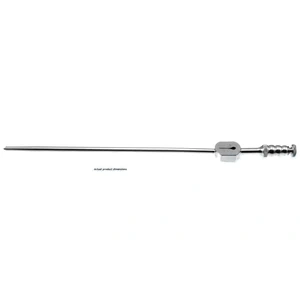
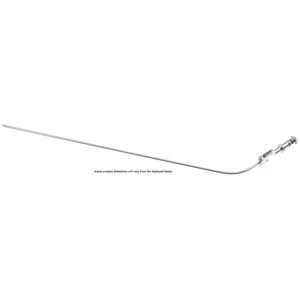
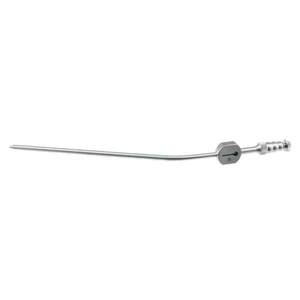
Selected ENT and Maxillofacial products
Frequently asked questions
Which metallurgical standards should a supplier identify?
Ask the supplier to identify the material used for each product and the applicable specification, such as ASTM F899 or ISO 7153-1 for surgical-instrument materials. Material examples can inform questions—martensitic 410/420 for cutting or working components, austenitic 316L for corrosion-resistant applications, and TC inserts in some needle-holder jaws—but they do not establish suitability by themselves. Confirm product-specific details and intended use.
How can we verify ISO 13485 and CE documentation?
If a supplier claims ISO 13485 certification, request the certificate and review its validity, scope, and relevance to the products being considered. For products supplied in the European market, request the applicable conformity documents and confirm the specific product’s classification and regulatory status with qualified reviewers. Do not assume that all micro instruments are CE Class I or that a general supplier statement confirms product-level compliance.
What affects microsurgical instrument longevity during reprocessing?
Autoclave frequency alone cannot predict service life. Cleaning effectiveness, handling, instrument condition, process compatibility, maintenance, and adherence to product instructions can all matter. Ask for validated, product-specific cleaning and sterilization instructions and inspection criteria. CSSD/SPD should assess whether the instructions fit local equipment and validated processes; use institutional experience with repairs and damage to inform future procurement reviews.
How should we compare set and container costs?
Compare equivalent set contents and include more than the initial purchase price. Consider container and storage needs, staff handling and inspection, reprocessing demands, maintenance, repairs, and replacement using local institutional data where available. The best configuration depends on the institution’s workflow and capacity, so avoid assuming that a larger or smaller set automatically saves money. Document assumptions so procurement teams can compare proposals consistently.
Related Clinical Categories & Procurement Pathways
Related Categories & Sourcing Hubs
Mahnoor Tariq
CSSD Lead & Surgical Reprocessing Protocols Specialist
Reviewed against ISO 13485:2016 quality management, ASTM F899 / DIN 1.4021 stainless steel standards, and 134°C hospital CSSD reprocessing.