English


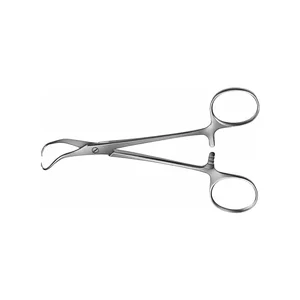
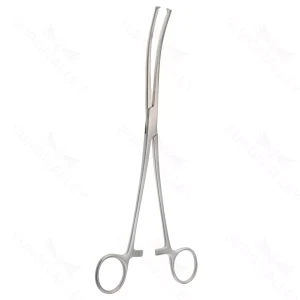
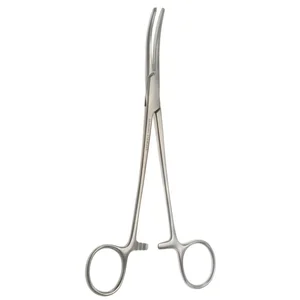
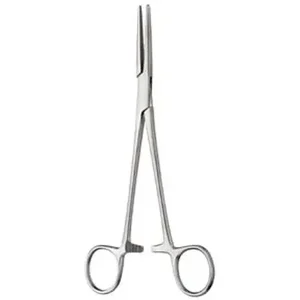
Debakey Hemostatic Forceps Curved 12.0 cm (4.7)
- Curved 4 3/4-inch shanks support controlled positioning around surgical anatomy.
- 60-degree angled shanks help approach structures from a practical working orientation.
- 1.4mm-wide atraumatic jaws support delicate tissue handling during clamping.
- Ring handle provides a familiar grip for controlled instrument manipulation.
- The 4 3/4-inch length supports maneuverability in focused operative fields.
- Suitable for cardiovascular and general surgery clamping applications.
Added to quote! View Quote Cart
Share:
Controlled Clamping for Cardiovascular and General Surgery
The DeBakey-Castaneda clamp is a ring-handle surgical clamp designed to grasp and control tissue or structures during cardiovascular and general surgery procedures. Its 4 3/4-inch length, curved shanks, and 60º angled profile support access and positioning where a straight approach may be less practical. The 1.4 mm wide atraumatic jaws provide a fine contact area for deliberate handling, while the ring handle supports familiar instrument control. This configuration helps teams manage clamping tasks with a focused, maneuverable instrument suited to detailed work in open surgical fields.
Use Cases
- Use for controlled clamping and handling tasks in cardiovascular surgery.
- Support tissue or structure management during general surgery procedures.
- Use the curved shanks and 60º angle to approach targets where a straight instrument path is less convenient.
- Apply the narrow, atraumatic jaws when a fine contact profile is appropriate for the task.
- Use the ring handle for familiar grasping and instrument manipulation during operative workflows.
Specifications
Care & Reprocessing
- Clean and reprocess the clamp according to the facility's procedures and the applicable instructions for use.
- Inspect the curved shanks, angled jaws, and ring handle for visible damage, residue, or impaired movement before use.
- Handle the atraumatic jaws carefully to help preserve their intended profile and alignment.
- Store the clamp in a manner that protects the jaws and prevents contact damage from other instruments.
Specifications
| Model / Pattern | Debakey |
| Overall Length | 12 cm (4.7") |
| Length (cm) | 12 cm |
| Shape | 60° |
| Coating/Material | AISI 420 German Stainless Steel |
| Jaw Pattern | Atraumatic DeBakey |
| Tip Type | Atraumatic Vascular Tip |
General use; follow facility protocols.
Technical Specifications
| Jaw Size | 1.4mm |
|---|---|
| Shape | Curved |
| Overall Length | 12 cm (4.7") |
| Jaw Size | 1.4mm |
| Angle & Direction | Curved |
| Length (cm) | 12 cm |
| Shape | 60° |
| Coating/Material | AISI 420 German Stainless Steel |
| Jaw Pattern | Atraumatic DeBakey |
| Tip Type | Atraumatic Vascular Tip |
🏆 Top Choice - 100%
100% rated this product positively
Rating breakdown
Write Your Review
Please login to write a review!
Product Reviews 1
N
Nour McKenzie
Surgical First Assistant 5.0
Verified Purchase Cardiovascular Surgery Jul 17, 2026 (3 months ago)
The curved profile clamp is well-made. I find it a practical addition to our cardiovascular inventory.
Was this helpful?