
 English


Learn how to specify a Langeneck retractor for general surgery by checking its pattern, blade geometry, handling, material documentation and compatibility with your CSSD workflow.
Choosing a Langeneck retractor for general surgery is not just a matter of matching a catalogue name. Clinical and procurement teams need to agree on the intended pattern, working-end geometry and handling characteristics, then verify that the supplied instrument and its documentation meet local requirements. A clear specification makes sample review and supplier comparison more meaningful.
Material and reprocessing claims also need practical verification. Rather than assuming that a steel grade or a supplier statement guarantees service life, request evidence for the offered instrument and review it alongside your facility’s approved reprocessing process. This guide provides a focused framework for evaluating the design, documentation and CSSD fit before purchase.
Define the Langeneck pattern and exposure needs
Start by identifying the exact Langeneck pattern your team expects. Instrument names and catalogue labels are not enough to establish that two offerings share the same geometry or operating characteristics. Ask suppliers for a drawing or clear product images, a written description of the working end, and the relevant catalogue reference. Have intended users compare these with the pattern already used or specified by the service.
Describe the exposure requirement in general terms that procurement can translate into a reproducible specification: the desired blade profile, working-end dimensions, reach, handle arrangement and whether the selected design is self-retaining. Confirm those details against the physical sample before approval. Do not treat a familiar eponym or a broad “general surgery retractor” label as proof that a particular configuration is interchangeable.
- Record the supplier’s exact pattern name and catalogue reference.
- Specify blade profile and dimensions rather than relying on a name alone.
- Confirm handle and locking features on the sample, if present.
- Document accepted sample details for future purchasing and receiving checks.
Assess blade geometry, edges and handling
Evaluate the blade as a working surface, not simply as a catalogue photograph. Compare its shape and finish with the approved sample, and look for visible irregularities, burrs, rough transitions or damage. Atraumatic intent should be defined by the institution’s clinical users and product requirements; the term itself does not prove that an edge is appropriate for a particular use. Request consistent descriptions and inspect the delivered pattern against the agreed specification.
Assess handle comfort and control during a structured, non-clinical evaluation by intended users. If the design includes a ratchet or another retaining mechanism, check that the mechanism engages and releases as specified, and that the instrument remains stable during the team’s evaluation. Consider grip security, access to the controls and ease of cleaning. Record concerns and acceptance criteria before comparing bids so that price does not become a substitute for fit.
- Inspect both sides of the blade and the transitions into the instrument body.
- Agree how blade-edge finish and visible defects will be assessed.
- Evaluate grip and control with the relevant users and local review process.
- If present, include retention and release checks in the sample review.
Request material evidence and reprocessing information
For stainless steel Langeneck blade metallurgy, request material identification tied to the offered product, together with supporting documentation the supplier can provide. A generic statement such as “surgical-grade stainless steel” is not a complete material specification. Confirm that the documentation names the material or applicable specification clearly enough for your organisation’s technical review, and ask how the evidence relates to the instrument being quoted.
Autoclave longevity cannot be inferred from a material label alone. Ask for the manufacturer’s instructions for use and reprocessing information applicable to the exact instrument, including any relevant handling, inspection and maintenance guidance. The CSSD should review that information against facility procedures and equipment. Avoid adopting cycle parameters from an unrelated product or relying on an informal assurance of unlimited reuse. Define how condition and performance will be monitored under your local process.
| Procurement question | Evidence to request | Review focus |
|---|---|---|
| What exact pattern is offered? | Catalogue reference, product description and drawing or images | Match the working end and configuration to the approved requirement. |
| What material is specified? | Product-linked material identification or supporting documentation | Check clarity, consistency and suitability for technical review. |
| How should it be reprocessed? | Applicable instructions for use and reprocessing guidance | Review with CSSD against facility procedures and equipment. |
| What is covered by supplier claims? | Written warranty, maintenance and complaint-handling terms | Separate documented commitments from general assurances. |
Check CSSD and tray compatibility before ordering
Tray fit and reprocessing workflow are part of the specification for a reusable instrument. Ask CSSD staff to review how the Langeneck retractor will be identified, positioned, protected and inspected within the intended tray or set. Check that the proposed arrangement supports the facility’s approved cleaning, inspection, packaging and sterilisation workflow. Do not assume that a tray designed for another retractor pattern will accommodate this instrument safely or consistently.
Before routine purchasing, agree on receiving and inspection criteria with the teams who handle the instrument. These may include confirmation of pattern and documentation, visual checks for damage or surface changes, and review of any mechanism for function where present. Establish how discrepancies will be reported and who can approve a substitute. This makes replacement purchasing more predictable and helps the CSSD flag issues for supplier follow-up.
- Review tray layout and instrument identification with CSSD before approval.
- Confirm the applicable reprocessing guidance is available to the staff who need it.
- Set receiving criteria for product identity, condition and required documents.
- Agree how repairs, complaints and proposed substitutions will be assessed.
Use a documented supplier and specification review
Compare offers against the same written requirements, not against marketing language alone. Request product-specific documentation and clarify which statements apply to the quoted pattern. If a supplier provides quality-system or regulatory documents, verify their scope, validity and relevance through your organisation’s normal process; a certificate or general compliance statement should not be treated as proof of every product feature or performance claim.
A practical decision record can bring together the approved sample, specification, material evidence, reprocessing review, supplier documentation and any open questions. Assign clinical, procurement and CSSD reviewers according to local governance. Keep unresolved points visible rather than filling gaps with assumptions. Where a bid proposes a different pattern or material, obtain review and approval before treating it as equivalent.
- Use one evaluation template for every supplier under consideration.
- Link documentation to the exact instrument or catalogue reference.
- Record exceptions, unanswered questions and approval decisions.
- Require review before accepting a substitute or specification change.
Make the specification verifiable
A sound Langeneck retractor purchase begins with an agreed pattern and working-end specification, followed by a sample review that includes clinical users and CSSD. Material statements, reprocessing guidance, tray fit and supplier documentation should all be checked against the offered instrument and your organisation’s requirements. These steps help teams compare products on evidence and operational fit rather than an instrument name alone.
Before placing an order, document the accepted configuration, evidence reviewed and any conditions for substitution or follow-up. That record gives procurement and receiving teams a consistent reference and gives CSSD the information needed for local workflow review. Final product and process approval should follow your organisation’s established clinical and procurement governance.
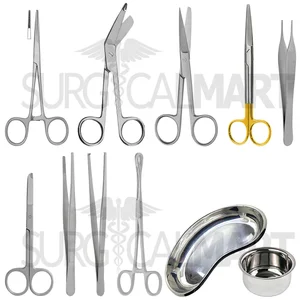
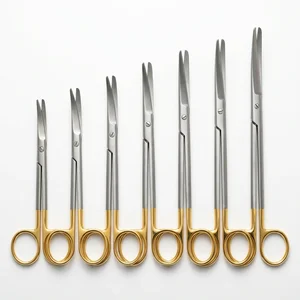
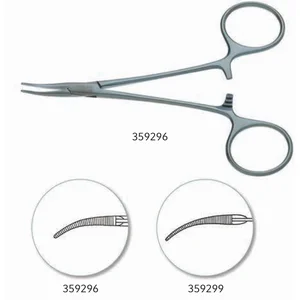
Selected Retractor System Sets products
Frequently asked questions
What should a Langeneck retractor specification include?
Include the exact pattern or catalogue reference, working-end description, blade profile and dimensions, handle configuration, and any retaining mechanism that applies to the offered design. Add the required product-linked material and reprocessing documentation, plus receiving and inspection criteria. The intended users should confirm that the written description matches the sample; a product name alone may not distinguish relevant configuration differences.
Does a stainless steel grade guarantee autoclave longevity?
No single material label establishes the service life of an instrument in your facility. Request material evidence tied to the product, review its applicable reprocessing guidance, and consider the instrument’s condition under your approved CSSD workflow. Suppliers should clarify the scope of their durability or warranty statements. Do not interpret a general material description or an assurance of reuse as a validated lifespan.
How should teams evaluate an atraumatic blade edge?
Define what edge finish and condition are acceptable for the institution’s intended use, then examine the sample and delivered instrument against those criteria. Look for visible roughness, burrs, damage or inconsistent transitions, and record the results. The label “atraumatic” is not a substitute for a clear specification or clinical review. Escalate uncertainty to the appropriate local reviewers rather than assuming suitability.
What should CSSD check before adding the instrument to a tray?
CSSD should review the product’s applicable reprocessing instructions and confirm that the proposed tray arrangement fits the facility’s approved workflow. Consider identification, positioning, protection, inspection access and how the instrument’s condition will be monitored. Confirm that staff can access the necessary guidance, and agree how damage or documentation discrepancies will be reported. Avoid assuming another retractor’s tray or process is automatically suitable.
Related reading
- Surgical Instrument Quality Control & Hospital CSSD Inspection Handbook: Physical Testing Protocols, Pass/Fail Thresholds & Maintenance Benchmarks
- Surgical Instrument Procurement Guide: Patterns, Metallurgy and Autoclave Longevity
Sources
Related Posts
Nov 13, 2026 by Farhan Shahzad
Nov 13, 2026 by Farhan Shahzad