
 English


A technical guide for clinical and procurement teams on selecting Moynihan forceps, covering atraumatic design, stainless steel metallurgy, regulatory compliance, and lifecycle economics.
Selecting the right intestinal clamps requires balancing surgical precision with institutional durability. Moynihan forceps are critical in gastrointestinal procedures where atraumatic tissue handling is paramount to patient safety and recovery outcomes.
This guide addresses the specific needs of clinical teams and procurement specialists. We examine metallurgical standards, regulatory documentation requirements, and reprocessing protocols to ensure you acquire instruments that maintain jaw integrity over thousands of sterilization cycles.
Clinical Indications and Atraumatic Design Principles
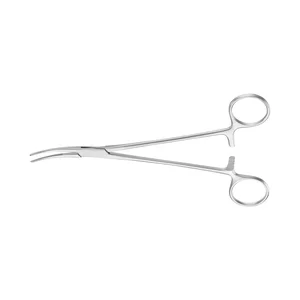
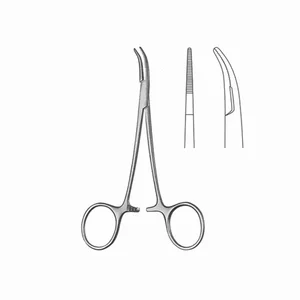
Moynihan forceps are distinguished by their curved jaws designed specifically for grasping bowel without causing crushing injury. Unlike straight clamps, the curvature allows surgeons to navigate around loops of intestine while maintaining a secure hold. The primary clinical objective is to occlude the lumen temporarily during anastomosis or resection without compromising the vascular supply of the tissue wall.
The serration pattern on the jaws is engineered to distribute pressure evenly across the contact surface. This design minimizes focal stress points that could lead to serosal tears or mucosal damage. When evaluating these instruments, clinicians must inspect the alignment of the serrations; any deviation can result in uneven compression, increasing the risk of post-operative complications such as leakage or strictures.
- Curved jaw geometry facilitates safe manipulation of mobile bowel segments.
- Fine serrations provide grip without penetrating the muscularis layer.
- Proper alignment ensures uniform pressure distribution across the tissue clamp site.
Metallurgical Standards and Jaw Durability
The longevity of Moynihan forceps depends heavily on the quality of the stainless steel alloy used in manufacturing. High-grade martensitic or austenitic stainless steels offer the necessary hardness to maintain edge retention while providing sufficient corrosion resistance against bodily fluids and cleaning agents. Passivation processes are critical in removing free iron from the surface, which otherwise acts as a nucleation site for pitting corrosion.
Procurement teams should request material certificates verifying the specific grade of steel and its heat treatment history. Inferior alloys may appear identical visually but will degrade faster under repeated thermal cycling. A key indicator of poor metallurgy is premature loss of tension at the box lock or visible micro-pitting on the jaw surfaces after only a few dozen sterilization cycles.
- Verify material certificates for specific stainless steel grades (e.g., AISI 420 or 316L variants).
- Inspect for passivation quality to prevent early-stage pitting corrosion.
- Assess box lock mechanism tolerance to ensure consistent jaw closure force.
Regulatory Compliance and Documentation
Institutional procurement mandates strict adherence to regulatory frameworks such as ISO 13485 for quality management systems. For markets requiring CE marking, Moynihan forceps typically fall under Class I medical devices. However, if they incorporate measuring functions or are supplied sterile, higher classifications may apply. Buyers must ensure suppliers provide Declarations of Conformity and Technical Files relevant to the intended use.
Documentation should explicitly state the biocompatibility testing results for materials in direct contact with tissue. Additionally, validation reports for sterilization compatibility are essential. These documents confirm that the instrument maintains structural integrity and functional performance after exposure to standard steam autoclave cycles. Without this evidence, hospitals assume unnecessary liability regarding device failure during surgery.
- Require ISO 13485 certification from the manufacturer.
- Obtain valid CE Declaration of Conformity for Class I devices.
- Review biocompatibility and sterilization validation reports before purchase.
Autoclave Longevity and Reprocessing Best Practices
Repeated exposure to high-pressure steam sterilization places significant thermal and mechanical stress on surgical instruments. For Moynihan forceps, the most common failure mode is jaw misalignment caused by differential expansion rates between the handle and jaw components. Proper reprocessing protocols mitigate this risk by ensuring instruments are fully dried before packaging and avoiding rapid cooling phases that induce thermal shock.
Clinical teams should implement routine inspection schedules focused on the hinge area and jaw tips. Lubrication of the box lock using water-soluble surgical instrument lubricants reduces friction and prevents seizing. Neglecting maintenance accelerates wear, leading to increased replacement costs and potential intraoperative failures. Training staff on correct loading techniques in sterilizers also prevents physical deformation from overcrowding.
- Use water-soluble lubricants to protect box locks from corrosion and seizing.
- Avoid overcrowding sterilizer trays to prevent physical bending of jaws.
- Conduct monthly inspections for jaw alignment and surface pitting.
Procurement Strategy and Total Cost of Ownership
Effective sourcing moves beyond unit price to evaluate total cost of ownership (TCO). Cheaper instruments often exhibit shorter lifespans due to inferior metallurgy or poor finishing, resulting in higher long-term expenditure through frequent replacements. An RFQ should specify technical tolerances for jaw alignment, required surface finish Ra values, and minimum expected sterilization cycles before retirement.
Vendor vetting should include assessments of their supply chain transparency and ability to provide traceable batch numbers. Establishing a framework agreement with a qualified supplier can stabilize pricing and ensure consistent quality. By prioritizing durability and compliance, institutions reduce inventory turnover rates and minimize the administrative burden associated with emergency replacements and adverse event reporting.
- Specify technical tolerances and surface finish requirements in RFQs.
- Evaluate vendors based on batch traceability and quality assurance processes.
- Calculate TCO including replacement frequency, not just initial purchase price.
Optimizing Instrument Selection for Safety and Efficiency
Selecting Moynihan forceps requires a holistic approach that integrates clinical design principles, metallurgical robustness, and rigorous regulatory compliance. By focusing on atraumatic features and verified material standards, healthcare providers ensure better patient outcomes and reduced complication risks.
Procurement teams should prioritize total cost of ownership over initial price tags. Implementing strict inspection protocols and partnering with transparent, ISO-certified suppliers guarantees that instruments remain reliable throughout their lifecycle, supporting both surgical excellence and operational efficiency.
Frequently asked questions
How do Moynihan forceps differ from Doyen clamps?
While both are intestinal clamps, Moynihan forceps feature a more pronounced curve and finer serrations designed for atraumatic handling of delicate bowel walls. Doyen clamps often have a different jaw profile and may be used for slightly different tissue thicknesses or procedural steps. Clinicians choose Moynihan patterns when minimizing tissue trauma during anastomosis is the primary concern.
What are the signs that a Moynihan forcep needs retirement?
Key indicators include visible pitting corrosion on the jaws, misalignment where the tips do not meet perfectly, or stiffness in the box lock that cannot be resolved with lubrication. Any deformation of the jaw curve or loss of serration definition compromises atraumatic function and necessitates immediate removal from service to prevent surgical complications.
Why is passivation important for stainless steel forceps?
Passivation removes free iron contaminants from the surface of the stainless steel, restoring the protective chromium oxide layer. This process significantly enhances corrosion resistance, preventing rust and pitting when the instrument is exposed to saline, blood, and harsh cleaning chemicals. Properly passivated tools last longer and maintain hygiene standards more effectively.
Can all Moynihan forceps be autoclaved repeatedly?
Most high-quality stainless steel Moynihan forceps are designed for repeated steam sterilization. However, longevity depends on the specific alloy grade and manufacturing tolerances. Always verify the manufacturer's validated cycle count. Instruments made from lower-grade steel may suffer from thermal fatigue or loss of temper after fewer cycles, leading to premature failure.
Featured Instruments & Sourcing Specifications
Explore hospital-grade surgical instruments and procedural specifications related to this clinical guide. Direct factory RFQ and bulk container orders available.
Selected Forceps products
Related Clinical Guides & Technical Sourcing:
- • How to Prepare a Surgical Instrument RFQ That Produces an Accurate Quote
- • Specifying Surgical Instrument Dimensions, Working Ends and Box Lock Articulation
- • Why Stainless-Steel Surgical Instruments Rust—and Passivation Solutions
- • Explore Surgivalley General Surgery Hemostatic Clamps & Forceps Catalog
- • Explore Custom Surgical Sets & Procedural Trays
- • Request Institutional Technical Quotation & OEM Sourcing Catalogue →
Moynihan Forceps Procurement Specifications
Hospital procurement officers, surgical leads, and regional supply chain managers can review technical specifications, passivation certificates (ASTM F899 / ISO 13485:2016), and institutional quotation terms across the official Hemostatic Forceps & Clamps Range catalog.
Related Posts
Oct 28, 2026 by Dr. Rachel Moore