
 English


A clinical and procurement guide for Sims forceps covering atraumatic design, AISI steel standards, ISO 13485 compliance, and total cost of ownership.
Selecting the right Sims forceps requires more than identifying a standard gynecological instrument. Clinical teams must balance atraumatic tissue handling with metallurgical durability to withstand repeated sterilization cycles. Procurement departments need clear specifications to ensure regulatory compliance and optimize container economics.
This guide provides a unified framework for aligning surgical requirements with sourcing realities. It addresses key decision points regarding steel grades, passivation protocols, and RFQ specifications to prevent ambiguous quotations and extend instrument lifecycle.
Clinical Indications and Atraumatic Design Requirements
Sims forceps are primarily used in gynecological procedures for grasping and manipulating delicate tissues. The design features a curved blade that allows access to posterior vaginal walls while minimizing trauma. Effective atraumatic handling depends on precise tip geometry and surface finish rather than just material hardness.
Surgeons require instruments that maintain grip without crushing fragile mucosal layers. When specifying these tools, clinical teams should prioritize designs that offer consistent jaw alignment and smooth transitions between the shank and the tip. Poorly finished edges or misaligned jaws can lead to tissue damage and increased operative time.
- Verify tip curvature matches specific procedural needs (anterior vs. posterior).
- Inspect surface finish for micro-abrasions that could harbor bacteria or snag tissue.
- Ensure jaw closure is uniform across the entire length of the gripping surface.
Metallurgy Standards: AISI 420 vs. 440 for Autoclave Resilience
The choice between AISI 420 and AISI 440 stainless steel significantly impacts autoclave longevity. AISI 420 offers good corrosion resistance and ease of sharpening, making it suitable for general use. However, AISI 440 contains higher carbon content, providing superior hardness and wear resistance, which is critical for instruments subjected to frequent high-temperature sterilization.
For institutional settings where Sims forceps undergo daily reprocessing, AISI 440 often delivers better long-term value despite higher initial costs. The enhanced hardness reduces edge degradation over hundreds of cycles. Procurement teams must weigh the upfront price against the reduced replacement frequency and lower risk of instrument failure during critical procedures.
| Property | AISI 420 Stainless Steel | AISI 440 Stainless Steel |
|---|---|---|
| Hardness | Moderate | High |
| Corrosion Resistance | Good | Very Good |
| Edge Retention | Fair | Excellent |
| Autoclave Durability | Standard | Enhanced |
Regulatory Compliance: ISO 13485 and CE Class I Documentation
Institutional procurement must verify that suppliers adhere to ISO 13485 quality management standards. This certification ensures consistent manufacturing processes and traceability from raw material to finished instrument. For markets requiring CE marking, confirming Class I medical device status is essential for legal distribution and hospital liability coverage.
Documentation should include declarations of conformity and technical files accessible upon request. Buyers should not assume compliance based solely on brand reputation. Requesting audit reports or certificates of conformance helps mitigate regulatory risks and ensures that the instruments meet the stringent hygiene and safety standards required in modern healthcare facilities.
- Request current ISO 13485 certificates from the manufacturer.
- Verify CE Class I classification and associated technical documentation.
- Confirm traceability systems for batch identification and recall readiness.
Reprocessing Protocols and Passivation for Longevity
Proper reprocessing extends the functional life of Sims forceps. Passivation removes free iron from the surface, restoring the chromium oxide layer that prevents corrosion. Without regular passivation, even high-grade stainless steel can develop pitting or rust spots after exposure to saline residues or improper drying during autoclaving.
Clinical teams should establish inspection protocols that check for discoloration or surface irregularities before each use. Suppliers may provide guidelines for optimal cleaning agents and passivation frequencies. Integrating these maintenance steps into the central sterile processing department workflow reduces unexpected instrument failures and maintains atraumatic performance characteristics.
- Schedule periodic passivation treatments based on usage volume.
- Inspect for pitting or discoloration as early signs of corrosion.
- Use validated cleaning solutions compatible with the specified steel grade.
Procurement Economics: Container Optimization and Total Cost
Total cost of ownership (TCO) for reusable instruments includes purchase price, reprocessing labor, maintenance, and eventual replacement. Optimizing tray configuration reduces the number of containers needed per procedure, lowering sterilization energy costs and handling time. A well-designed set minimizes excess inventory while ensuring all necessary variants are available.
When calculating TCO, consider the frequency of replacement due to wear versus breakage. Higher-quality AISI 440 instruments may have a longer lifespan, offsetting their higher unit cost through fewer replacements. Analyzing historical data on instrument turnover rates helps procurement teams justify investments in durable materials and efficient tray layouts.
- Calculate TCO including sterilization cycles and repair costs.
- Optimize tray configurations to reduce container count per case.
- Analyze historical replacement rates to predict future budget needs.
RFQ Specification Checklist for Clinical Teams
Ambiguous requests for quotation lead to inconsistent deliveries and potential non-compliance. To avoid this, specify exact metallurgical grades, surface finishes, and dimensional tolerances in the RFQ. Include requirements for packaging, labeling, and accompanying regulatory documents to streamline receiving and validation processes.
Define acceptance criteria clearly, such as maximum allowable deviation in jaw alignment or surface roughness values. Requesting samples for evaluation before bulk ordering allows clinical staff to assess ergonomics and performance firsthand. This proactive approach ensures that the procured Sims forceps meet both surgical expectations and institutional procurement standards.
- Specify AISI grade (e.g., 420 or 440) explicitly.
- Define surface finish requirements (e.g., satin, polished).
- List required regulatory certifications and documentation formats.
- Include dimensional tolerances for critical working parts.
Aligning Clinical Needs with Procurement Strategy
Successful sourcing of Sims forceps requires collaboration between clinical users and procurement specialists. By focusing on metallurgical resilience, regulatory compliance, and lifecycle economics, institutions can secure instruments that perform reliably under demanding conditions.
Implementing detailed RFQ specifications and robust reprocessing protocols further protects the investment. Regular review of TCO metrics ensures that purchasing decisions remain aligned with operational goals and patient safety standards.
Frequently asked questions
Why is AISI 440 preferred over AISI 420 for some Sims forceps?
AISI 440 has higher carbon content, resulting in greater hardness and wear resistance. This makes it more durable for instruments undergoing frequent autoclaving and heavy use, potentially reducing replacement costs despite a higher initial price.
What does ISO 13485 certification guarantee for surgical instruments?
ISO 13485 certifies that the manufacturer maintains a quality management system specifically for medical devices. It ensures consistent production processes, traceability, and adherence to regulatory requirements, but does not validate individual product performance claims.
How does passivation affect the lifespan of stainless steel forceps?
Passivation restores the protective chromium oxide layer on stainless steel by removing free iron contaminants. This process enhances corrosion resistance, preventing pitting and rust that can compromise structural integrity and atraumatic surface quality over time.
What key elements should be included in an RFQ for Sims forceps?
An effective RFQ should specify the steel grade, surface finish, dimensional tolerances, required regulatory certifications (like CE or ISO), packaging details, and acceptance criteria. Including sample evaluation clauses helps verify suitability before bulk purchase.
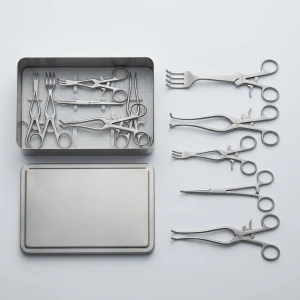
Featured Instruments & Sourcing Specifications
Explore hospital-grade surgical instruments and procedural specifications related to this clinical guide. Direct factory RFQ and bulk container orders available.
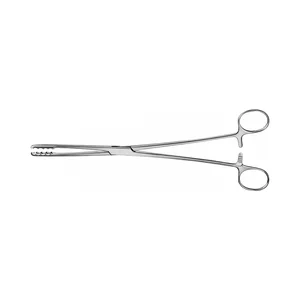
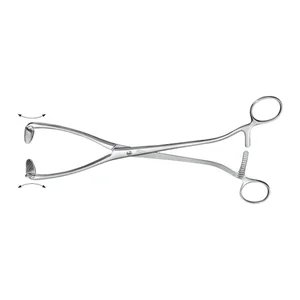
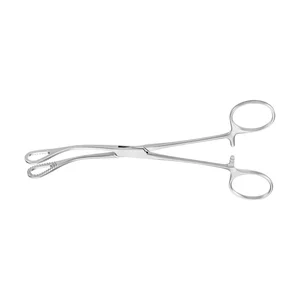
Selected Forceps products
Related Clinical Guides & Technical Sourcing:
- • Uterine Clamps: Types, Specifications and Hospital Procurement Guide
- • Hegar vs Pratt Cervical Dilators: A Procurement Comparison Checklist
- • How to Prepare a Surgical Instrument RFQ That Produces an Accurate Quote
- • Explore Surgivalley OB/GYN & Uterine Surgical Instruments Catalog
- • Explore Custom Gynecology Sets & Procedural Trays
- • Request Institutional Technical Quotation & OEM Sourcing Catalogue →
Sims Forceps Procurement & Pattern Guide
Hospital procurement officers, surgical leads, and regional supply chain managers can review technical specifications, passivation certificates (ASTM F899 / ISO 13485:2016), and institutional quotation terms across the official Surgical Forceps & Clamping Instruments catalog.
Continue with Gynecology & Obstetrics Instruments by Family
Use the specialty hub to browse relevant instrument families, live catalogue links and the quote pathway.
Related Posts
Oct 28, 2026 by Dr. Rachel Moore