
 English


Learn how to compare Heaney, Wertheim, Zeppelin and Masterson uterine clamps, define jaw and box-lock requirements, and build a clearer RFQ for hospital procurement.
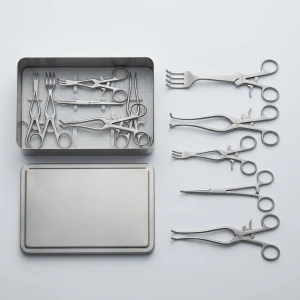
A uterine clamp procurement decision should begin with the intended instrument pattern and the information needed to compare alternatives consistently. Names such as Heaney, Wertheim, Zeppelin and Masterson can identify established configurations, but a name alone may not communicate the exact curvature, jaw profile, serration arrangement, length, handle form or finish required by a hospital. Procurement teams should therefore convert clinical and departmental requirements into documented, comparable specifications before requesting quotations.
The same discipline applies to reusable instrument construction and reprocessing. Jaw engagement, box-lock movement, inspection access and supplier instructions can affect whether a quoted instrument is suitable for evaluation. This guide provides a neutral framework for comparing uterine clamp types, documenting hemostatic features, requesting validated reprocessing information and obtaining wholesale quotations that can be reviewed line by line.
Uterine Clamp Types: Heaney, Wertheim, Zeppelin and Masterson
Begin by listing the named patterns requested by surgeons, the service line using them and the intended set or procedure context. Heaney, Wertheim, Zeppelin and Masterson should be treated as comparison starting points rather than complete specifications. Confirm the exact pattern through a drawing, approved sample, catalog reference or other controlled description. Record whether the clamp is straight or curved, the working-end orientation, overall length, jaw relationship, handle configuration and locking mechanism. This prevents a familiar name from concealing a meaningful configuration difference.
For gynecologic and obstetric surgery centers, the comparison should also distinguish a required instrument from a possible substitute. A substitute may resemble the requested pattern while differing in curvature, working length, opening behavior or tissue-contact geometry. Ask the clinical stakeholder to identify which characteristics are essential and which may be proposed alternatives. Keep those decisions separate from commercial preferences so that quotations can be assessed against an agreed requirement.
- Record the requested pattern name and any approved reference number.
- Confirm straight or curved configuration and working-end orientation.
- Specify overall length and relevant jaw dimensions using a controlled measurement method.
- Identify whether alternatives are acceptable and who must approve them.
- Separate mandatory features from preferred features in the purchasing record.
| Comparison field | What to document | Why it matters |
|---|---|---|
| Pattern | Heaney, Wertheim, Zeppelin, Masterson or approved equivalent | Creates a common starting point for supplier responses. |
| Configuration | Curvature, orientation, length and handle form | Reduces ambiguity between visually similar instruments. |
| Working end | Jaw profile, meeting behavior and locking position | Connects the quoted design to the requested use. |
| Reference | Drawing, sample, catalog reference or internal code | Provides a controlled basis for later comparison. |
Jaw Geometry and Hemostatic Serration Specifications
A useful jaw specification describes more than the word serrated. Ask the supplier to identify the serration pattern, direction, spacing or other relevant geometry in terms that can be checked against an approved reference. Also document jaw length, width, curvature, tip form, alignment and how the jaws meet when closed. If the requirement concerns atraumatic handling, secure approximation or a particular tissue-contact behavior, that requirement should be defined by the clinical or technical team rather than inferred from the pattern name.
Avoid treating a serration description as proof of performance. A quotation should explain the configuration being offered, while sample evaluation should confirm alignment, closure and surface condition. Procurement teams can request drawings or marked-up images where terminology is insufficient, but the final requirement should remain a controlled written description. This makes competing quotations easier to normalize and helps identify when a proposed equivalent needs technical review.
- Describe serration direction, pattern and spacing where relevant to the approved design.
- Record jaw length, width, curvature, tip form and closure relationship.
- State whether teeth, atraumatic features or another working-end condition is required.
- Request a drawing or sample when words alone cannot define the geometry.
- Require technical review for any proposed equivalent or substitution.
Box Lock Construction, Function and Inspection Points
The box lock is a functional inspection area, not simply a construction label. A procurement review should define what the receiving or quality team will examine: smooth opening and closing, appropriate alignment, consistent jaw meeting, absence of binding, accessible cleaning surfaces and freedom from visible defects. If the instrument includes a ratchet, specify the required engagement behavior and the positions that must be evaluated. These checks should be based on the hospital's approved inspection procedure and the intended instrument configuration.
Longevity should not be promised from a general statement about box-lock design. Instead, ask suppliers how the offered construction is controlled, what inspection records accompany production and what acceptance criteria apply to samples or incoming goods. A sample review can compare movement, lock engagement and jaw alignment with the approved reference. Document deviations before a bulk order is authorized, and preserve the approved sample or drawing as the comparison standard.
- Inspect movement through the working range without binding or abnormal resistance.
- Check jaw alignment and meeting behavior in the closed position.
- Evaluate ratchet engagement, if present, against the approved requirement.
- Look for surface defects, gaps, sharp edges or inaccessible contamination points.
- Define sample acceptance criteria before approving a bulk order.
Sterilization and Reprocessing Information to Verify
For reusable uterine clamps, procurement should request the supplier's current instructions for use and reprocessing documentation before approval. The documentation should identify applicable cleaning, inspection, packaging and sterilization information for the exact instrument configuration. Do not insert a generic autoclave temperature, exposure time or drying sequence into an RFQ unless the hospital's validated process and the supplier's instructions support that requirement. The relevant question is whether the offered instrument has clear, compatible instructions that the facility can review through its infection-prevention and sterile-processing teams.
Ask the supplier to identify any limitations that affect cleaning access, inspection or packaging. The hospital should then compare the documentation with its established equipment, workflow and validation responsibilities. Procurement can record whether instructions were received, reviewed and accepted, but should not treat the existence of a document as evidence that every local cycle is suitable. Reprocessing approval belongs with the responsible technical and clinical functions.
- Request the current instructions for use for the exact quoted configuration.
- Ask for cleaning, inspection, packaging and sterilization information.
- Do not assume a generic autoclave cycle applies to every reusable clamp.
- Refer compatibility questions to sterile-processing and infection-prevention teams.
- Record document revision, review status and unresolved questions.
How to Build a Comparable Uterine Clamp RFQ
A strong RFQ turns the approved requirement into fields that every supplier must complete. Include the pattern name, reference image or drawing, configuration, dimensions, jaw geometry, handle and lock requirements, quantity, packaging expectations and required documentation. Where a feature is not yet decided, label it as open for supplier proposal rather than leaving a blank field that may be interpreted differently by each respondent. Ask suppliers to identify deviations explicitly and to quote equivalents on separate lines.
Wholesale quotation review should also separate product facts from commercial terms. Request unit price, quantity basis, tooling or development charges if applicable, lead-time assumptions, quote validity, payment terms, packaging details and any minimum order condition. Do not compare totals until the technical scope and quantity basis are normalized. A procurement record should show which claims are supplier-confirmed, which are pending sample inspection and which require internal approval.
- Use one line item for each pattern, size or configuration.
- Attach a controlled drawing, image or approved sample reference.
- Require suppliers to list deviations and proposed equivalents separately.
- Request documentation, sample requirements and commercial terms in defined fields.
- Normalize quantities, packaging and quote assumptions before comparing totals.
Wholesale Quotation and Supplier Documentation Checklist
Before award, create a review file that connects the RFQ, supplier response, technical documents, sample findings and approval decision. For each uterine clamp, confirm that the quoted pattern and configuration match the requirement, the jaw and box-lock details are sufficiently defined, and reprocessing documentation has been reviewed by the responsible team. If a supplier cannot confirm a requested detail, record it as an open issue instead of converting an assumption into a specification.
The final decision should reflect technical suitability, documentation completeness and commercial comparability. A lower quoted price does not resolve an unclear working end, undocumented substitute or unreviewed reprocessing requirement. Use a written clarification log and obtain approval for material deviations. This approach also gives the hospital a defensible record for repeat purchasing, replacement orders and future supplier discussions.
- Match every quotation line to an approved requirement.
- Record technical deviations, unanswered questions and approval owners.
- Review sample findings before authorizing production or bulk purchase.
- Confirm that reprocessing documents correspond to the quoted model.
- Retain the final comparison and approval record for future repeat orders.
Make the Clamp Requirement Measurable
A reliable uterine clamp procurement process connects four decisions: which pattern is required, how the working end must be defined, what construction and inspection points matter, and what reprocessing documentation the facility must review. Heaney, Wertheim, Zeppelin and Masterson names can organize the comparison, but they should not replace a controlled description of configuration, jaw geometry, box-lock function and reference material.
For the next RFQ, use one standardized line per clamp configuration, require suppliers to identify deviations, and separate confirmed facts from items awaiting sample or internal review. This produces quotations that are easier to compare and reduces the risk that an assumed equivalent, unspecified serration pattern or generic sterilization statement is accepted without the appropriate technical approval.
Frequently asked questions
Should a hospital specify only the uterine clamp pattern name?
No. A pattern name is a useful starting point, but the RFQ should also define configuration, curvature, working length, jaw profile, serration description, handle or ratchet requirements and reference material. If an equivalent is acceptable, state how it will be reviewed and who has authority to approve a deviation.
What should a supplier provide for jaw serration requirements?
The supplier should describe the offered serration pattern in clear, reviewable terms and relate it to the quoted configuration. Where terminology is insufficient, request a drawing, marked-up image or sample. Procurement should avoid treating the word serrated as evidence of a particular geometry or clinical performance.
Can procurement specify one standard autoclave cycle for all reusable clamps?
Procurement should not assume that one generic cycle applies to every configuration or facility. Request current instructions for use covering cleaning, inspection, packaging and sterilization, then have the responsible sterile-processing and infection-prevention teams assess compatibility with local validated processes and equipment.
How can buyers compare wholesale quotations fairly?
Normalize the technical scope before comparing price. Use identical line-item fields for pattern, configuration, dimensions, quantity, documentation, packaging and commercial assumptions. Require deviations and proposed equivalents to be listed separately, and keep sample approval, unresolved questions and quote conditions visible in the final comparison.
Related reading
- How to Prepare a Surgical Instrument RFQ That Produces an Accurate Quote
- Hemostatic Forceps Compared: Mosquito, Kelly, Crile and Kocher Patterns
- How to Specify Surgical Instrument Dimensions, Working Ends, Handles and Configurations
- How to Compare Surgical Instrument Families Without Guesswork
Clinical Metallurgy & CSSD Sterilization Parameters (ASTM F899)
Uterine and hysterectomy clamps (Heaney, Wertheim, Zeppelin, and Masterson patterns) are forged from high-tensile Martensitic AISI 420 stainless steel conforming to ASTM F899 specifications. Precision heat-treatment delivers a Rockwell hardness of HRC 50–52, providing the essential elastic recovery required for repetitive pedicle clamping without permanent jaw deflection. All clamps undergo automated chemical passivation in accordance with ASTM A967 to build a passive chromium-rich oxide film resistant to bioburden and enzymatic cleaning solutions. Validated for standard hospital CSSD pre-vacuum steam sterilization cycles at 134°C (273°F) for 5 minutes at 2.2 bar operating pressure.
Direct Sialkot Manufacturing & Institutional RFQ Procurement
SurgiValley manufactures premium surgical instruments and sterile single-use procedure packs under ISO 13485:2016 quality management systems. All instruments are backed by full metallurgical test certificates (MTR) and validated for hospital CSSD steam sterilization.
Request Institutional Quote / Catalogue Explore Surgical Sets & Procedural Trays
Gynecological Clamp & Forceps Sourcing
Hospital procurement officers, surgical leads, and regional supply chain managers can review technical specifications, passivation certificates (ASTM F899 / ISO 13485:2016), and institutional quotation terms across the official Surgical Forceps & Clamping Instruments catalog.
Continue with Gynecology & Obstetrics Instruments by Family
Use the specialty hub to browse relevant instrument families, live catalogue links and the quote pathway.
Related Posts
Oct 28, 2026 by Dr. Rachel Moore
Oct 28, 2026 by Farhan Shahzad