
 English


A buyer-friendly comparison of common hemostatic forceps patterns, including size, jaw profile, serrations, teeth, curvature and inspection points.
Mosquito, Kelly, Crile and Kocher are useful catalogue families, but the names alone do not settle jaw form, serration, tooth configuration, curvature or length. Buyers should describe the exact pattern being compared.
The practical objective is a line item that a supplier can quote and an inspector can later verify. This comparison therefore focuses on visible configuration and documented acceptance points.
Why pattern names need supporting specifications
Pattern names vary between catalogues and may cover several sizes or curves. Add a reference, overall length, jaw profile, serration extent and any tooth configuration to prevent an assumed match.
Mosquito forceps in compact sets
Mosquito-pattern requests should identify the compact size, curve and jaw detail expected by the buyer. Do not treat every small haemostatic forceps as the same article.
Kelly and Crile pattern differences
Kelly and Crile descriptions can differ in how catalogues present serration and jaw geometry. Use the approved catalogue record or drawing rather than relying on the family label in isolation.
What makes Kocher-style jaws distinctive
A Kocher-style request should state the required tooth or working-end configuration and the corresponding size. That feature must be visible in the sample and recorded in the acceptance criteria.
Straight, curved and length variants
Straight and curved variants should remain separate RFQ lines with their individual lengths and quantities. Combining them under one label makes supplier substitutions and incoming checks difficult to control.
Inspection points for a sample or incoming lot
Inspect jaw alignment, closure, ratchet engagement, joint movement and the specified working-end form. Record the sample identifier and accepted configuration for repeat supply.
Frequently asked questions
Are Kelly and Crile interchangeable names?
No. Catalogue conventions differ; compare the exact jaw, serration, curve, length and reference offered.
What distinguishes a Kocher-style request?
The buyer should explicitly state the tooth or working-end configuration together with size and curvature.
Which checks belong in sample approval?
Check identity, dimensions, alignment, ratchet engagement, movement and the agreed jaw features.
Putting the guidance into practice
A useful forceps comparison converts familiar names into measurable line-item requirements.
Keep each variant separate and retain the approved sample record so later orders are not accepted by name alone.
References and further reading
Continue with General Surgery Instruments by Family
Use the specialty hub to browse relevant instrument families, live catalogue links and the quote pathway.
Related Posts
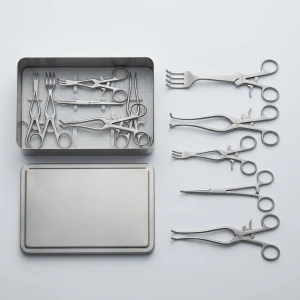
Oct 28, 2026 by Dr. Rachel Moore
Oct 28, 2026 by Farhan Shahzad