
 English


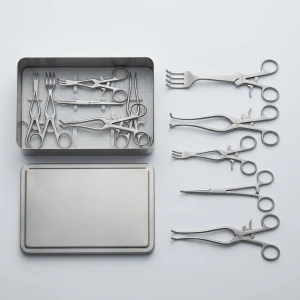
Understand the practical differences between handheld, self-retaining and table-mounted surgical retractors when planning a set or sourcing program.
Procurement teams and OR planners often face a bewildering array of retractors, each promising better exposure, easier handling, or a smaller footprint. Understanding the functional families—handheld, self‑retaining, and table‑mounted—helps translate those promises into realistic budget and workflow decisions.
SurgiValley’s catalog mirrors the broader market, where instrument dimensions, locking mechanisms, and tray compatibility vary by manufacturer. By focusing on the tasks each family supports, the staffing required to operate them, and the downstream impact on sterilization cycles, buyers can align retractor selections with clinical protocols without over‑specifying or under‑equipping a suite.
What all retractors are designed to accomplish
All retractors share the core purpose of creating and maintaining a clear operative window while protecting surrounding tissues. Whether a simple handheld blade or a complex table‑mounted frame, the instrument must sustain exposure without slipping, bending, or causing undue pressure.
Beyond exposure, retractors influence instrument traffic, tray count, and sterilization logistics. A well‑chosen family reduces the number of ancillary devices—such as extra clamps or support arms—thereby simplifying inventory control and lowering the risk of missing components during case turnover.
- Consistent tissue retraction force
- Compatibility with standard instrument trays
- Ease of cleaning and inspection
When handheld patterns make sense
Handheld retractors excel in procedures that require frequent repositioning, such as exploratory laparotomies or cases where the surgeon prefers tactile feedback. Because the retractor is held directly, the team can adapt quickly to unexpected anatomy without disengaging a lock.
From a procurement standpoint, handheld sets are compact, have fewer moving parts, and typically fit into existing tray systems. However, they increase staffing requirements; a dedicated assistant must maintain tension for the duration of the exposure, which can affect labor budgeting.
- Low upfront cost
- Minimal mechanical failure points
- Higher staffing demand
How self-retaining retractors change the setup
Self‑retaining retractors introduce a locking mechanism that frees an assistant’s hands, allowing the surgical team to focus on other tasks. They are especially valuable in long, deep cavity work where constant manual pressure would be tiring or inconsistent.
The trade‑off is a more complex tray composition—often a base frame, interchangeable blades, and tension springs. Procurement must verify that the selected blade sizes match the case mix and that the locking hardware is compatible with the facility’s instrument organization system, such as the B. Braun AESculap layout.
- Reduces intra‑operative staffing
- Requires compatible blade inventory
- Needs periodic tension‑spring checks
What distinguishes table-mounted systems
Table‑mounted retractors attach directly to the operating table or a dedicated stand, providing a rigid, hands‑free retraction platform. They are favored for extensive exposures like thoracotomies or orthopedic approaches where stability outweighs setup time.
Because they occupy a larger portion of the table surface, planners must account for positioning of other equipment, anesthesia circuits, and patient access. The larger footprint also influences transport containers and sterilization loads, so the purchasing decision should include a review of the facility’s container capacity and cycle validation data.
- Maximum stability for deep fields
- Larger footprint on the table
- Often requires dedicated transport cases
Questions to resolve before requesting a quote
Clarify the typical case length, expected exposure area, and whether the surgeon prefers manual adjustment or fixed positioning. Identify the number of procedures per week that will use each retractor family to size the initial order and spare‑part pool appropriately.
Confirm the compatibility of the chosen pattern with existing tray organization, such as the B. Braun instrument sets, and verify that the sterilization department can accommodate the retractor’s cleaning requirements. Finally, ask about warranty terms, service contracts, and the availability of replacement blades or locking components.
- Case volume and duration
- Tray and container compatibility
- Sterilization cycle fit
Care, inspection and set organization
After each use, retractors must be inspected for hinge wear, lock integrity, and surface damage before entering the sterilizer. Follow the manufacturer’s IFU and applicable standards—such as ISO 17664—for cleaning validation, and document any deviations in the CSSD log.
Organizing the sets according to a proven system, like the B. Braun instrument organization framework, streamlines counting, reduces missing parts, and speeds up case turnover. Labeling each component, maintaining a master inventory list, and scheduling periodic functional testing keep the retractor fleet reliable over its service life.
- Routine visual and functional checks
- Use standardized container labeling
- Track component wear in a maintenance log
Frequently asked questions
Can a handheld retractor be substituted with a self‑retaining model for the same procedure?
Yes, if the blade size and geometry match the case requirements and the OR staff is trained on the locking mechanism, but the change may affect tray composition and sterilization load.
What sterilization method is recommended for self‑retaining retractors?
Follow the instrument’s IFU; most are compatible with standard steam sterilization, but verify that the locking springs and hinges can withstand the cycle parameters used in your facility.
Do table‑mounted retractors require special transport containers?
Typically they are supplied in rigid, reusable containers designed for their size; confirm that the container fits your CSSD’s tracking system and that you have enough units for back‑up during cleaning cycles.
How often should the tension springs in a self‑retaining set be replaced?
Inspect springs at each preventive maintenance interval—often quarterly or after a defined number of cycles—and replace them according to the manufacturer’s recommended service schedule or when tension loss is observed.
Is it necessary to have a separate spare‑part inventory for each retractor family?
Maintaining a small stock of critical components—blades, locks, springs—helps avoid downtime; the exact quantities depend on case volume and the lead time from the supplier.
Putting the guidance into practice
Choosing the right retractor family hinges on balancing exposure quality, staffing resources, and downstream logistics. By mapping clinical needs to the functional traits of handheld, self‑retaining, and table‑mounted systems, procurement can avoid over‑specifying and keep inventory lean.
A disciplined approach to specification, compatibility checks, and routine care ensures that each retractor performs reliably, supports efficient case flow, and ultimately contributes to a safer, more predictable operating environment.
References and further reading
Related Posts
Oct 28, 2026 by Dr. Rachel Moore
Oct 28, 2026 by Farhan Shahzad