
 English


Clinical and procurement guide for Deschamps aneurysm needles and deep ligature carriers. Covers blunt atraumatic tip navigation, left/right curve orientation, surgical stainless steel durability, and sterile reprocessing standards.
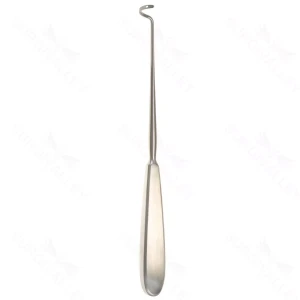
Surgical access to deep vascular pedicles and arterial bifurcations requires specialized instrumentation capable of encircling vessels without puncturing or tearing fragile adventitial tissue. The aneurysm needle—clinically termed a ligature carrier (such as the classic Deschamps, Cooper, or Syme patterns)—is an indispensable atraumatic instrument engineered specifically for this delicate task.
In both cardiovascular surgery and neurosurgical exploration, navigating around a vessel or the neck of an aneurysm requires meticulous tactile precision. Unlike standard suturing needles or clamping forceps, an aneurysm needle features a smooth, blunt probe tip with an integrated ligature eyelet mounted on a slender, contoured shank. This allows surgeons to safely pass braided silk, polyester, or monofilament ligatures around deep arteries before vessel ligation or permanent microvascular clip placement.
Clinical Distinctions: Ligature Carriers vs. Aneurysm Clips & Clamps
A frequent point of confusion in surgical procurement is distinguishing between ligature-passing needles and vessel-occluding clamps:
- Aneurysm Needles (Deschamps Ligature Carriers): Manual, probe-ended ligature guides designed solely to steer suture threads around deep vessels, aneurysm necks, or vascular bundles without grasping or clamping tissue. They feature no jaws, no box locks, and no serrated teeth.
- Microvascular Aneurysm Clips (Yasargil / Sugita Patterns): Spring-loaded micro-implants applied with bayonet forceps across the neck of a cerebral or peripheral aneurysm to permanently obliterate the lumen while sparing parent vessel blood flow.
- Aortic & Peripheral Aneurysm Clamps (DeBakey / Crawford Patterns): Ring-handled vascular hemostatic clamps featuring atraumatic longitudinal serrations (DeBakey teeth) designed for temporary cross-clamping during resection and graft anastomosis.
Atraumatic Design: Curvature Geometry and Eyelet Integrity
The primary clinical requirement for any ligature carrier is absolute vessel safety during circumferential passage. Key structural considerations include:
- Left vs. Right Curvature: Deschamps carriers are manufactured in designated left-hand and right-hand curvatures. This enables the operator to approach arterial trunks from either lateral flank while keeping their hands outside the microscopic field of view.
- Blunt Bulbous Apex: The distal extremity is precisely radiused and polished to push aside loose adventitia and connective tissue planes rather than penetrating vessel walls.
- Deburred Ligature Eyelet: The suture eyelet situated near the tip must undergo precision electrochemical deburring. Sharp inner margins can shear fine 3-0 to 6-0 cardiovascular sutures during passage, creating catastrophic intraoperative delays.
- Rigid Ergonomic Shank: A flat or hexagonal handle transition provides rigid rotational stability, preventing torque deviation as the curve navigates behind deep vessels.
| Design Feature | Clinical Function | Procurement Standard |
|---|---|---|
| Distal Curvature | Circumferential vessel encircling | Matched Left & Right pairs |
| Tip Profile | Atraumatic adventitial dissection | Blunt, highly polished radius |
| Suture Eyelet | Guides silk or monofilament ties | Electropolished, zero burrs |
| Instrument Shank | Deep cavity reach and tactile feel | Rigid martensitic stainless steel |
Hospital-Grade Surgical Steel & Autoclave Reprocessing
Because aneurysm needles are subject to rotational torsional loads and frequent hospital reprocessing, metallurgical integrity directly determines clinical lifespan. High-grade reusable instruments are precision forged from martensitic stainless steel (AISI 410 or AISI 420), offering superior rigidity and resistance to bending under surgical loads.
To withstand hundreds of sterile processing cycles, the instruments undergo comprehensive chemical passivation in accordance with ASTM F899 standards. This process strips surface-free iron, forming a chromium oxide passivation barrier that prevents pitting corrosion, staining, and micro-fissuring during repeated 134°C vacuum steam autoclave cycles.
- Inspect tips under magnification during CSSD intake to ensure absence of micro-burrs or tip deformation.
- Enforce neutral pH enzymatic wash protocols to preserve the chromium passivation layer.
- Verify ISO 13485 quality management certification and CE Class I compliance from the manufacturer.
Frequently Asked Questions
What is the difference between sharp and blunt Deschamps aneurysm needles?
Blunt Deschamps needles are standard for passing ligatures around arteries and delicate vascular pedicles, ensuring surrounding structures are not lacerated. Sharp-tipped variants are reserved for penetrating dense fibrous fascia or peri-ligamentous tissues where blunt dissection alone cannot establish a clearance path.
Why are aneurysm needles provided in Left and Right orientations?
The directional curve allows surgeons to navigate around vessels from either side of the patient or anatomical plane without crossing wrists or obstructing visual sightlines through surgical loupes or operating microscopes.
Are aneurysm needles the same as aneurysm clips?
No. Aneurysm needles are reusable probe instruments with an eyelet used to carry ligature thread around vessels. Aneurysm clips (such as Yasargil clips) are spring-action occlusion implants applied directly onto cerebral aneurysm necks using clip-applying forceps.
How should CSSD teams inspect ligature carriers before tray assembly?
Sterile processing technicians should inspect the distal eyelet for residual bioburden, verify that the eyelet rim is completely smooth and free of burrs by running an inspection suture through it, and ensure the shaft has zero bend or hairline fractures.
Featured Instruments & Sourcing Specifications
Explore hospital-grade surgical instruments and procedural specifications related to this clinical guide. Direct factory RFQ and bulk container orders available.
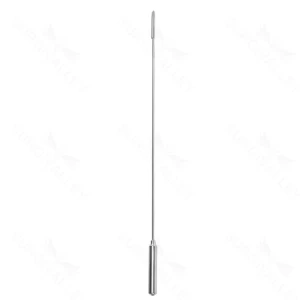
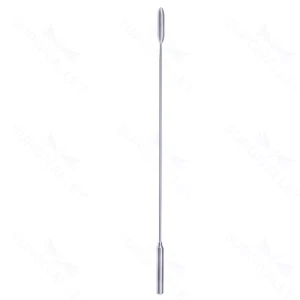
Selected Dilators | Probes | Ligature Carriers products
Related Clinical Guides & Technical Sourcing:
- • Cardiovascular Forceps and Clamps: Selection and Alloy Guide
- • Castroviejo Microvascular Needle Holders: Size and Alloy Guide
- • Specifying Surgical Instrument Dimensions, Working Ends and Handles
- • Explore Surgivalley Cardiovascular & Thoracic Surgical Catalog
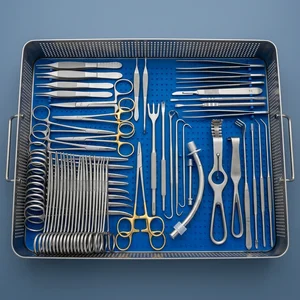
- • Explore Custom Cardiovascular Surgical Trays
- • Request Institutional Technical Quotation & OEM Sourcing Catalogue →
Continue with Cardiovascular & Thoracic Instruments by Family
Use the specialty hub to browse relevant instrument families, live catalogue links and the quote pathway.
Related Posts
Oct 28, 2026 by Dr. Rachel Moore