
 English


Learn how to specify and evaluate Babcock tissue forceps, including fenestrated jaw design, articulation, material documentation, reprocessing evidence, sample checks and bulk purchasing terms.
Sourcing Babcock tissue forceps requires more than selecting a familiar instrument name. Clinical teams and procurement professionals need to translate the intended grasping task into clear requirements for jaw geometry, working length, handle configuration and mechanism performance. A useful sourcing process also distinguishes essential functional requirements from preferences that may unnecessarily narrow the supplier pool.
The objective is a repeatable evaluation process that supports safe instrument selection and consistent purchasing decisions. Buyers should request clear documentation, inspect representative samples and compare commercial terms alongside the instrument itself. This approach helps teams assess whether a proposed Babcock forceps configuration fits their intended use and whether the supplier can support the requirements over the purchasing lifecycle.
Match Fenestrated Jaw Geometry to the Intended Grasping Task
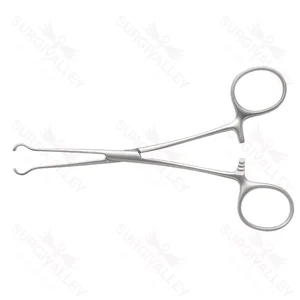
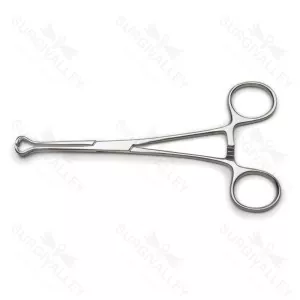
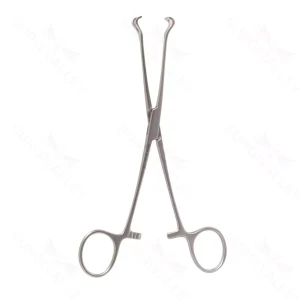
Babcock forceps are generally selected when a clinical team needs a grasping instrument designed around a fenestrated jaw pattern rather than a solid, sharply toothed or narrowly serrated contact surface. The relevant question is not simply whether the jaws are described as atraumatic. Buyers should ask how the opening, contact surfaces and closing action are intended to support the tissue-handling task, then confirm that the proposed pattern matches the team’s established technique and instrument preference.
An RFQ should describe the required jaw pattern in observable terms. Request drawings, photographs or samples when a catalogue description leaves room for interpretation. The specification should identify the intended grasping application, preferred jaw opening and closing characteristics, and any restrictions on teeth, serrations or edges. Avoid treating the word atraumatic as a performance guarantee; it is a design objective that still requires clinical review and sample evaluation.
- State the intended grasping task and tissue-handling preference.
- Describe the required fenestration and contact-surface pattern.
- Clarify whether toothed, serrated or smooth areas are acceptable.
- Request a drawing or representative sample for ambiguous configurations.
- Have the relevant clinical users review the proposed jaw pattern.
Specify Dimensions, Handles and Box-Lock Articulation
Dimensions should be specified as a coordinated set rather than as an isolated overall length. Working length, jaw proportions, handle configuration and the relationship between the closed jaws and the handles all influence how the instrument fits the team’s established workflow. When comparing alternatives, use the same measurement definitions and ask suppliers to identify how each dimension is taken. This reduces confusion when catalogue terminology differs between manufacturers.
The box-lock is a key inspection area because it joins the jaws and supports the opening and closing motion. Buyers should assess whether the articulation feels controlled through its range, whether the jaws meet as intended and whether the joint shows unwanted looseness, binding or uneven movement. These checks should be made on samples and repeated across multiple units when a bulk order is being considered. A smooth-feeling sample alone does not establish long-term durability, so request the supplier’s available maintenance, inspection and lifecycle evidence.
- Define working length and overall length using consistent terms.
- Compare jaw proportions, handle style and ring comfort with current practice.
- Check jaw alignment in the closed position.
- Assess the box-lock for controlled motion, binding and excess play.
- Record acceptance criteria before reviewing production samples.
| Requirement | Buyer question | Evidence to request |
|---|---|---|
| Jaw pattern | Does the fenestrated design match the intended grasping task? | Drawing, catalogue detail or representative sample |
| Dimensions | Are working and overall lengths defined consistently? | Dimensioned specification or inspection record |
| Articulation | Does the box-lock move smoothly and align the jaws? | Sample inspection criteria and quality records |
| Handle configuration | Is the instrument compatible with the team’s established workflow? | Sample review by representative users |
Document Steel, Passivation and Finish Requirements
Material language should be specific enough to support supplier qualification without assuming that a familiar term proves suitability. If the purchasing requirement calls for AISI surgical steel or another defined material designation, ask the supplier to state the offered grade and the documentation available for that claim. The purchasing file should distinguish between a material declaration, a certificate or test record, and a general catalogue statement.
Passivation and finish should be treated as documented process and inspection requirements, not as marketing shorthand. Ask how the supplier defines the required finish, what records are retained and how surface condition is checked before shipment. Buyers should also clarify how the supplier manages visible defects, corrosion concerns, burrs, rough transitions and damage that could interfere with cleaning or handling. These questions help create a more auditable specification while avoiding unsupported assumptions about a particular product.
- Name the required material designation in the RFQ.
- Ask what material, batch or conformity documentation is supplied.
- Define the expected surface finish and acceptable visible condition.
- Request an explanation of passivation documentation and inspection records.
- Clarify how nonconforming instruments are identified and managed.
Assess Reprocessing Evidence and Bulk Procurement Terms
Reusable instruments should be evaluated against the healthcare organisation’s established cleaning, inspection and steam sterilization processes. Buyers should request the supplier’s available reprocessing instructions and determine whether they address the specific instrument configuration. Do not infer autoclave longevity from a general statement that an instrument is reusable. Instead, ask what evidence supports repeated processing, which inspection points should be monitored and what conditions may affect the instrument’s service life.
Bulk purchasing decisions should combine technical acceptance with commercial clarity. Compare the complete delivered cost, minimum order requirements, lead-time commitments, packaging, replacement policy and treatment of defects or shortages. A lower unit price may not represent better value if samples fail acceptance checks, replenishment is uncertain or the supplier cannot provide consistent documentation. A staged approval process can reduce risk: review the specification, inspect samples, confirm documentation, then agree production and delivery terms.
- Request configuration-specific cleaning and sterilization guidance.
- Ask what evidence is available for repeated reprocessing and service life.
- Define sample approval before authorizing a production quantity.
- Compare unit price, freight, packaging, lead time and replacement terms.
- Confirm how shortages, defects and specification changes will be handled.
| Procurement stage | Primary decision | Recommended record |
|---|---|---|
| Specification review | Does the proposed instrument match the clinical requirement? | Approved RFQ and dimensioned description |
| Sample inspection | Do representative units meet functional and visual criteria? | Signed inspection checklist and sample photos |
| Supplier review | Can the supplier support documentation and consistency? | Qualification file and agreed quality records |
| Commercial review | Are total cost and delivery obligations clear? | Quote comparison and purchase terms |
| Receipt inspection | Does the delivered batch match the approved sample? | Receiving report and nonconformance record |
Build a Defensible Babcock Forceps Specification
A strong Babcock tissue forceps sourcing process connects the clinical grasping task with observable requirements for fenestration, dimensions, handle configuration and articulation. It then adds documented expectations for material, passivation, finish and reprocessing information. Keeping these requirements explicit gives clinical users a meaningful role in approval and gives procurement teams a consistent basis for supplier comparison.
Before placing a bulk order, approve a defined sample, record the inspection criteria and confirm the supplier’s documentation and commercial commitments. Compare total purchasing value rather than unit price alone, and establish how future batches will be checked against the approved configuration. This restrained process supports clearer decisions without assuming that catalogue terminology alone demonstrates performance or longevity.
Selected Forceps products
Frequently asked questions
What makes Babcock tissue forceps suitable for an atraumatic grasping requirement?
Suitability depends on whether the fenestrated jaw geometry, contact surfaces and closing action match the intended grasping task. The term atraumatic should be treated as a design objective rather than proof of clinical performance. Clinical users should review the proposed pattern, inspect representative samples and confirm that the instrument fits their established handling requirements.
How should fenestrated jaws be described in an RFQ?
Describe the intended grasping task, fenestration pattern, contact-surface preference and any restrictions on teeth or serrations. Include the required dimensions and request a drawing, image or sample when words alone could be interpreted differently. Having representative users approve the pattern before production helps prevent an otherwise acceptable instrument from being supplied in the wrong configuration.
What should buyers inspect in a Babcock forceps box-lock?
Inspect the joint for controlled opening and closing, appropriate jaw alignment, unwanted looseness, binding and visible surface defects. Define these checks before samples arrive and apply them consistently across multiple units. Sample movement does not establish service life, so ask separately for the supplier’s available quality, maintenance and repeated-use evidence.
How can a team evaluate autoclave longevity before a bulk purchase?
Request reprocessing instructions specific to the proposed configuration and ask what evidence supports repeated cleaning and steam sterilization. Confirm which signs of wear, corrosion, damage or altered articulation should be monitored. Because longevity depends on both instrument construction and the organisation’s processes, use sample approval and an agreed receiving or periodic inspection plan rather than relying on a general reusable-instrument claim.
Sources
Related Posts

Oct 28, 2026 by Dr. Rachel Moore
Oct 28, 2026 by Farhan Shahzad