
 English


Plan ENT instrument sets around the requested procedure, surgeon preference, tray capacity, inspection needs and replacement strategy.
An ENT instrument set should be built from the procedures and functions defined by the buyer, not copied from a universal list. Otology, rhinology, sinus and throat work can require different patterns, sizes and protection needs.
A controlled set list gives every item its own reference, quantity and configuration while also recording tray organization, documentation and substitution rules.
There is no single universal ENT set
No single ENT set represents every facility or procedure mix. Begin with the buyer’s intended scope, local preferences and the instruments already supported by its processing and inventory systems.
Define scope before choosing instruments
Translate the scope into functions such as access, visualization, grasping, cutting, suction or measurement. Then select named instrument families without assuming that every possible item belongs in the set.
Group the list by function
For each line, record pattern, overall length, tip or jaw detail, curvature, size and quantity. Similar photographs should not be used to merge different configurations.
Capture pattern, length and tip details
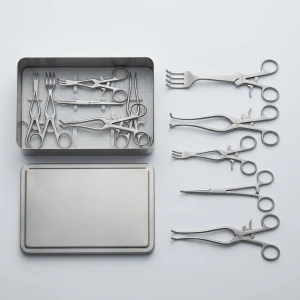
Protect fine tips and separate heavy components when planning the tray. Confirm that joints, lumens or detachable parts remain accessible for the facility’s validated cleaning and inspection process.
Plan protection, cleaning access and tray layout
Review the assembled sample set against the controlled item list, including identification and tray position. The approval record should state any accepted alternative rather than silently replacing a requested article.
Approve the set and control later substitutions
Maintain revision control over the set list. A later substitution should be assessed for function, dimensions, tray fit, processing and documentation before it enters a repeat order.
Frequently asked questions
How should an ENT set project begin?
Start with the facility’s procedure scope and required functions, then build the item list from those needs.
Is a photograph enough to identify each item?
No. Record pattern, length, working-end detail, size and article reference where available.
How are substitutions controlled?
List the proposed alternative against the original line and obtain documented approval before updating the set revision.
Putting the guidance into practice
A useful ENT set is a controlled list of individually specified instruments, not a generic bundle.
Link the approved list, sample review and tray plan so quotations, inspection and future replacement decisions remain consistent.
References and further reading
Continue with ENT Instruments by Anatomical Category
Use the specialty hub to browse relevant instrument families, live catalogue links and the quote pathway.
Related Posts
Oct 28, 2026 by Dr. Rachel Moore