
 English


A practical surgical instrument procurement guide for clinical teams covering pattern verification, working-end inspection, metallurgy evidence, reprocessing review, supplier documentation and total cost.
Clinical teams comparing reusable surgical instruments need more than a catalogue description or a favourable sample. The procurement decision should connect the intended handling requirement with the instrument pattern, working-end geometry, material documentation, reprocessing expectations and supplier controls. A structured review helps clinical, sterile processing and purchasing stakeholders assess the same requirements before an RFQ or supplier decision.
This surgical instrument procurement guide presents a cross-specialty framework for that review. It does not replace local clinical, infection prevention, reprocessing or regulatory procedures. Instead, it helps teams define what must be specified, what evidence should be requested, and which acceptance checks can make comparisons more consistent.
Define the instrument pattern and handling requirement
Begin with the task the instrument must support, then describe the required pattern in terms that a supplier can reproduce and a receiving team can inspect. Relevant details may include instrument family, overall configuration, working-end form, jaw or tip characteristics, shaft profile, handle style, locking features and any dimensional requirements established by the clinical team. Avoid relying on a brand name or a catalogue image as the complete specification.
Pattern verification is especially important when several instruments appear similar but differ in reach, balance, working-end geometry or intended handling. Ask clinical users to identify the features that affect control, access and tissue interaction. Record those features in the specification, along with acceptable alternatives, prohibited substitutions and the method for reviewing samples before approval.
- Define the clinical task and intended handling requirement.
- Describe the pattern using inspectable features rather than a catalogue name alone.
- Record critical dimensions, configuration details and acceptable tolerances where established locally.
- Identify substitutions that require clinical or procurement approval.
- Use representative samples to confirm that the written specification matches the expected instrument.
| Specification area | Questions for the team | Evidence to retain |
|---|---|---|
| Pattern | What configuration and working-end form are required? | Approved description, drawing or sample record |
| Handling | What balance, reach, grip or actuation characteristics matter? | User review notes and acceptance criteria |
| Substitution control | Which changes require approval before supply? | RFQ instructions and change-control record |
Evaluate working-end geometry and atraumatic handling
Working-end inspection should be practical, repeatable and appropriate to the instrument family. Clinical reviewers can compare alignment, symmetry, surface condition, closure or engagement, edge form and movement against the approved sample or specification. The review should focus on whether the instrument supports the intended handling requirement without introducing avoidable concerns from misalignment, roughness, unintended sharpness or inconsistent movement.
A claim of atraumatic performance should not be accepted as a substitute for defined acceptance criteria. The clinical team should explain which physical features matter for its use and how those features will be checked during sample evaluation and incoming inspection. Findings should be documented in language that purchasing, quality and sterile processing teams can use consistently.
- Compare the working end with an approved reference sample or controlled specification.
- Inspect alignment, symmetry, closure, surface condition and movement as relevant to the pattern.
- Define who performs the clinical and quality review and how findings are recorded.
- Separate observable acceptance criteria from unsupported performance language.
- Escalate discrepancies before approving a substitute or production order.
Request metallurgy and quality-system evidence
A supplier discussion about instrument metallurgy should lead to documentation that identifies the material or material family used for the relevant instrument and explains how it is controlled. Request the level of stainless steel documentation, traceability and change notification that your institution requires. The evidence should be reviewed for consistency with the quoted product, the approved sample and the supplier's documented quality process.
Quality-system and conformity documents should also be verified rather than inferred from a logo, statement or general marketing language. If ISO 13485 evidence or CE Class I documentation is relevant to the procurement, ask for the applicable certificate, declaration or supporting record and confirm its scope, validity and relationship to the supplied product through the appropriate institutional process. Do not treat a document as proof of characteristics it does not cover.
- Request material identification and relevant supporting documentation.
- Confirm that documents relate to the quoted product, supplier and applicable manufacturing scope.
- Review traceability, change notification and nonconformance processes where required.
- Verify the scope and validity of any ISO 13485 evidence requested by the institution.
- Verify the applicable CE Class I documentation through the institution's regulatory review process.
- Record unresolved evidence gaps as procurement conditions rather than assumptions.
Assess reprocessing expectations and autoclave longevity
Autoclave longevity should be assessed as a lifecycle question, not accepted as an unsupported durability promise. Ask the supplier for care, cleaning and steam sterilization information applicable to the instrument. Then compare that information with the facility's validated reprocessing workflow and the instrument's construction, joints, finishes and working-end requirements. The supplier's instructions and the institution's process must be reviewed together by the responsible teams.
A procurement review should also define how condition will be monitored after use. Inspection criteria may include corrosion or surface change, alignment, movement, joint condition, sharpness where relevant and damage that could affect handling. Establish who records findings, how failed instruments are quarantined or replaced, and how recurring issues are communicated to the supplier. Avoid converting general compatibility language into a guaranteed service life.
- Obtain applicable cleaning, care and steam sterilization instructions.
- Have sterile processing personnel compare supplier guidance with the validated local workflow.
- Define post-use inspection points for joints, surfaces, alignment and working ends.
- Set a process for quarantine, replacement and supplier feedback when an instrument fails inspection.
- Treat longevity as an outcome to monitor, not a claim to assume.
Build the RFQ and compare total procurement cost
An effective RFQ makes comparison possible before commercial terms are considered. Include the approved pattern description, required quantities, documentation expectations, sample or first-article review, inspection criteria, substitution controls, packaging requirements and the information needed for reprocessing review. Ask suppliers to identify exclusions, assumptions and any differences between the quoted item and the requested specification.
Container economics should be evaluated alongside unit price. The relevant comparison may include the number of instruments needed per procedure or service, reserve quantities, tray or container capacity, replacement requirements, inspection and reprocessing workload, documentation effort and the consequences of holding additional inventory. Use the institution's own usage and cost data rather than assuming that a lower unit price produces a lower total procurement cost.
- Attach a controlled specification and identify approval requirements for substitutions.
- Request item-level pricing, documentation, samples and delivery assumptions in comparable formats.
- Include acceptance criteria for pattern, working end, finish, movement and documentation.
- Model container quantities, reserve stock, replacement needs and reprocessing workload.
- Evaluate lifecycle and operational costs alongside purchase price.
- Document the reasons for selection so future replenishment follows the approved standard.
| RFQ area | What to specify | How to compare |
|---|---|---|
| Product definition | Pattern, configuration, dimensions and critical features | Check every quotation against the controlled specification |
| Evidence | Material records, quality documents and reprocessing information | Confirm scope, applicability and outstanding gaps |
| Acceptance | Sample review, inspection criteria and change control | Record pass, fail, conditional approval or required action |
| Economics | Quantities, reserves, containers and replacement assumptions | Use consistent institutional cost and usage inputs |
Use a staged approval and acceptance process
The strongest procurement decisions separate specification, evidence review, sample evaluation and final acceptance. Clinical users can confirm handling requirements, sterile processing can review reprocessing implications, quality or regulatory personnel can assess documentation, and purchasing can compare commercial and supply terms. A shared decision record reduces the risk that one attractive feature or low price outweighs an unresolved requirement.
Before the order is released, confirm that the selected item, documentation and approval status match the RFQ. At receipt, use the agreed inspection criteria and retain records for nonconforming items, approved changes and future replenishment. This staged approach supports consistent sourcing without treating any single supplier statement as conclusive evidence.
- Assign review responsibilities across clinical, sterile processing, quality and purchasing teams.
- Approve the written specification before requesting comparable quotations.
- Review samples and documentation against the same acceptance criteria.
- Release orders only after unresolved conditions are addressed or formally accepted.
- Use receiving and post-use findings to inform future sourcing decisions.
Make the procurement record decision-ready
A reusable surgical instrument decision is strongest when the approved pattern, handling requirement, working-end checks, metallurgy evidence, reprocessing review and supplier documentation support one another. Clinical teams should define what matters before comparing quotations, verify evidence within its proper scope and avoid treating general durability or compliance language as proof.
Use the framework as a starting point for an institution-specific RFQ and approval record. Align the criteria with local clinical practice, sterile processing validation, quality procedures and regulatory responsibilities, then review representative samples before committing to a broader order.
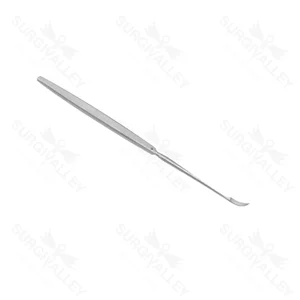
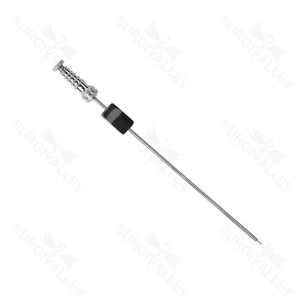
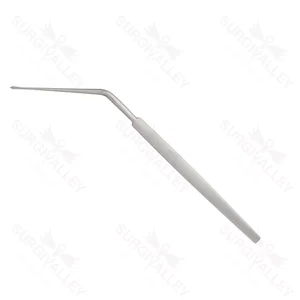
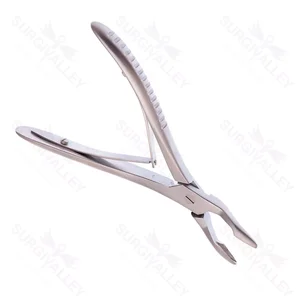
Selected ENT and Maxillofacial products
Frequently asked questions
What should a hospital specify before requesting quotations for reusable surgical instruments?
Specify the intended clinical task, instrument family, configuration, working-end features, critical dimensions, handling requirements, documentation needs, sample-review process and acceptance criteria. Include substitution controls so a visually similar alternative cannot be supplied without review. The more clearly the requirement is defined, the easier it is to compare quotations and inspect received instruments consistently.
How can a team compare surgical instrument patterns when catalogue names differ?
Translate each pattern into observable features such as working-end form, shaft or handle configuration, reach, balance, actuation and relevant dimensions. Compare approved samples or controlled drawings rather than relying on names or images alone. Ask clinical users to identify which differences affect access, control or tissue handling, and record those differences in the procurement specification.
What metallurgy evidence should procurement teams request?
Request material identification and the supporting documentation appropriate to the instrument and institutional requirements. Review traceability, supplier change controls and consistency between the documentation, quoted item and approved sample. If material or finish is critical to the application, define how it will be verified. Do not infer a specific composition, performance level or service life from a broad stainless steel description.
How should ISO 13485 or CE Class I documentation be checked?
Treat these documents as items for formal verification, not as general quality claims. Confirm the document issuer, scope, validity, product relationship and any conditions or limitations through the institution's quality or regulatory process. A certificate or declaration should not be used to support claims outside its scope, and unresolved documentation gaps should be recorded before supplier approval.
How can buyers assess autoclave longevity without making unsupported claims?
Request applicable cleaning and steam sterilization instructions, compare them with the facility's validated workflow and define condition checks for receiving and ongoing use. Monitor alignment, movement, surfaces, joints and other relevant features, then record failures and replacement patterns. This produces institution-specific lifecycle evidence without promising a fixed service life that has not been demonstrated.
Sources
Related Posts

Oct 28, 2026 by Dr. Rachel Moore