
 English


Compare surgical scissors by blade geometry, tip pattern, curvature, length, intended material and inspection requirements.
Surgical scissors that share a familiar pattern name may still differ in blade geometry, tip combination, curvature, length and construction. Those details should be written into the product request rather than inferred from a photograph.
Selection begins with the material or task described by the buyer, then moves to measurable configuration and sample inspection. This guide stays focused on procurement rather than surgical technique.
Begin with intended material and task
Start with the cutting task and material identified in the customer requirement. That context helps distinguish a delicate pattern from a heavier general pattern without claiming that one instrument suits every use.
Straight and curved blade geometry
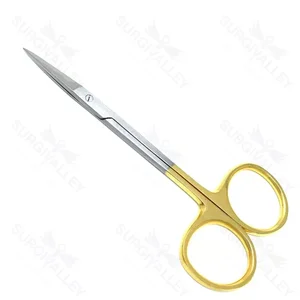
State whether the blades are straight or curved and how the supplier records that curvature. A side view, dimensioned reference and overall length reduce ambiguity between visually similar catalogue items.
Sharp, blunt and mixed tip configurations
Write sharp/sharp, blunt/blunt or mixed tips explicitly, including any distinctive profile. Tip terminology should match the drawing or approved sample used for acceptance.
Length, leverage and common pattern names
A named pattern can aid catalogue search, but length and working-end geometry still need confirmation. Regional naming and numbering conventions should not substitute for measurable detail.
What optional inserts and finishes change
If inserts, coatings or a particular finish are requested, identify them as separate requirements and ask for applicable supporting information. Do not infer construction from colour or marketing terminology.
How buyers can inspect a scissors sample
Inspect the sample for symmetry, blade relationship, smooth movement and the specified working-edge condition using an agreed non-clinical method. Retain the accepted reference for comparison with the supplied lot.
Frequently asked questions
Is the pattern name a complete scissors specification?
No. Add length, curvature, blade form, tip combination and any construction or finish requirement.
What should sample inspection record?
Record identity, dimensions, alignment, movement, working-edge observations and the acceptance decision.
Can appearance confirm a coating or insert?
No. Ask the supplier to identify the construction and provide the evidence required for the quoted item.
Putting the guidance into practice
A scissors RFQ becomes comparable when blade, tip, curvature and length are stated plainly.
Use the approved product record or sample to control repeat orders and document any accepted variation.
References and further reading
Related Posts
Oct 28, 2026 by Dr. Rachel Moore
Oct 28, 2026 by Farhan Shahzad