
 English


Hospital procurement and clinical engineering guide for controlling surgical instrument RFQ revisions, ASTM F899 metallurgy compliance, and CSSD autoclave validation.
The Operational Importance of Surgical Instrument RFQ Revisions
In modern hospital procurement systems, surgical supply chain networks, and global medical device distribution, requests for quotation (RFQs) are rarely finalized in a single step. As clinical requirements are translated into manufacturing blueprints, quote revisions become the primary mechanism for aligning surgical preferences, sterile processing constraints, biomedical safety standards, and financial parameters. Operating room surgical teams frequently request subtle modifications in instrument geometry, such as specific tip curvatures, micro-serration pitch, or handle balancing. Simultaneously, Central Sterile Supply Department (CSSD) managers demand strict compliance with automated decontamination equipment, ultrasonic baths, and validated steam autoclave protocols. Without a systematic revision control methodology, mismatched specifications, conflicting part numbers, unverified metallurgical alloys, and unexpected delivery delays will inevitably disrupt operating theater schedules.
Establishing Rigorous Revision Identifiers and Versioning Standards
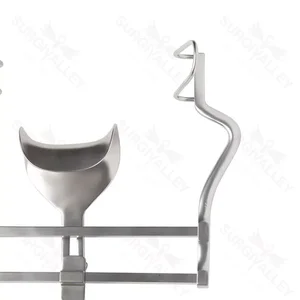
Every iteration of a surgical instrument RFQ must be assigned an immutable alphanumeric revision code, such as Rev A, Rev B, or Rev C. This version identifier must be consistently stamped across all line items, technical specifications, CAD drawings, sample approval certificates, and proforma invoices. In complex procedural assemblies—such as major laparotomy sets, microvascular trays, orthopedic trauma systems, or cardiovascular bypass packs—a change in a single instrument pattern can have significant downstream ramifications. Modifying the working angle of a deep pelvic retractor, for example, can alter how the instrument sits inside a standard sterilization basket, potentially exceeding maximum tray weight recommendations or obstructing steam circulation channels.
Clinical Metallurgy & Sterilization Protocol (ASTM F899 Compliance)
The foundational bedrock of any surgical instrument quote revision is uncompromising metallurgical verification. Quotations must explicitly state compliance with ASTM F899 standard specifications for surgical steel. Martensitic stainless steel grades (such as AISI 410 and AISI 420) must be specified for sharp cutting scissors, rongeurs, osteotomes, and needle holders, ensuring a calibrated Rockwell hardness of HRC 50–54 for durable edge retention without brittleness. Non-magnetic Austenitic alloys (AISI 304 and AISI 316L) must be designated for retractor frames, specula, malleable ribbon retractors, and holloware containers to ensure superior deep ductility and non-galling properties.
Every approved revision must document that finished instruments undergo chemical passivation in accordance with ASTM A967 (citric acid or nitric acid passivated chromium oxide barrier) to eliminate free surface iron. Furthermore, instruments must be certified for repeated hospital CSSD steam sterilization at 134°C (273°F) under 2.2 bar pre-vacuum autoclave parameters, surviving hundreds of decontamination cycles without micro-pitting or surface discoloration.
Master Sample Evaluation and Bench Testing Protocols
Before executing high-volume purchase orders or approving a finalized quote revision for container-load manufacturing, physical pre-production samples must undergo multi-point bench testing. Clinical biomedical engineers and purchasing specialists must evaluate:
- Jaw Alignment and Scissoring Action: Symmetrical blade closure with uniform contact along the entire shearing edge.
- Box-Lock and Ratchet Integrity: Smooth engagement across all ratchet teeth without binding, lateral play, or premature disengagement under operational load.
- Surface Micro-Roughness: Satin or electrolytic mirror finishes measuring below Ra 0.4 µm to prevent organic soil bioburden adhesion.
- Chemical Corrosion Resistance: Compliance with ASTM F1089 boil testing and copper sulfate immersion to verify complete passivation barrier formation.
Procurement Change-Order Checklists for Hospital Purchasing Teams
To eliminate ambiguity between hospital purchasing officers and Sialkot manufacturing facilities, standardized change-order documentation must specify:
- Cross-Referenced Catalog Numbers: Verification against OEM standards (e.g., Codman, Aesculap, Jarit, or Sklar reference patterns).
- Dimensional Tolerances: Exact millimeter tolerances for overall length, working end dimensions, and jaw opening angles.
- Tungsten Carbide Insert Pitch: Precise specification of pyramid serration pitch (0.4mm fine pitch for 4-0 to 6-0 sutures, 0.5mm standard pitch for 2-0 to 3-0 sutures).
- Laser-Etched UDI Traceability: GS1 DataMatrix barcodes and human-readable lot identifiers complying with FDA UDI and EU MDR regulations.
- Sterile Packaging Configurations: Requirements for individual silicone tip protectors, sealed polyethylene pouches, or validated ISO 11607 Tyvek barriers.
Managing Cost Drivers and Scope Creep
Surgical instrument manufacturing costs are governed directly by raw alloy ingot grade, heat-treatment vacuum furnace hours, precision CNC milling, and skilled hand-finishing labor. When requesting customizations—such as non-reflective black ceramic coatings, custom handle knurling, or specialized gold-plated handle rings—procurement officers should establish transparent unit cost breakdowns to prevent unexpected budgetary escalations.
Tray Geometry and Sterilization Container Fitment
One of the most frequent sources of late-stage RFQ revisions is physical tray layout mismatch. Surgical sets are organized within perforated aluminum or stainless steel sterilization baskets lined with silicone pin mats. When an instrument’s length or curvature is modified during revision rounds, purchasing teams must recalculate overall tray weight (keeping it within the AAMI ST79 recommended 25-pound ceiling) and verify that steam dispersion channels remain unobstructed.
Sialkot Forging Die Alignment and First-Article Inspection (FAI)
In high-precision manufacturing centers such as Sialkot, Pakistan, forging dies dictate the structural integrity of surgical instruments. When an RFQ revision calls for customized handle ergonomics or unique jaw angles, manufacturers must conduct a formal First-Article Inspection (FAI). The initial forging run is inspected using optical coordinate measuring machines (CMM) and metallurgical spectrometer analysis to ensure that grain flow aligns with peak stress vectors. Tooling adjustments must be formally logged before mass production begins.
Non-Conformance Resolution and Corrective Action Protocols
Should a delivery shipment exhibit deviations from the approved revision document—such as slight discrepancies in satin luster or ratchet tooth pitch—a structured Corrective and Preventive Action (CAPA) protocol must be initiated. The direct manufacturer logs the revision deviation, recalibrates milling tolerances, and issues revised inspection sign-off sheets before replacement dispatch.
Biomedical Engineering Acceptance and Operating Room Sign-Off
The ultimate test of any revised surgical instrument takes place in the hands of the surgical team. Hospital biomedical engineering departments must implement formal clinical sign-off protocols where head theater nurses and lead surgeons test sample instruments under simulated clinical conditions. Feedback regarding tactile grip feel, finger ring ergonomics, and spring tension must be documented and incorporated into the finalized revision baseline before procurement contracts are finalized.
Procurement Key Performance Indicators (KPIs) and Batch Lead Times
Hospital logistics managers must establish objective Key Performance Indicators to track quotation evolution. Metrics such as Revision Cycle Duration (target under 72 hours per engineering review), Dimensional First-Pass Yield (target exceeding 98.5%), and Milestone Adherence ensure that production schedules stay aligned with surgical block schedules. Direct Sialkot container shipments require predictable production lead times of 45 to 60 days, during which metallurgical batch testing and pre-shipment inspections are systematically completed.
Institutional Procurement Summary and Long-Term Quality Commitment
Managing surgical instrument quote revisions with methodical discipline protects hospital capital budgets while ensuring that clinical teams receive instruments tailored precisely to operative demands. Transparent versioning, rigorous ASTM F899 material compliance, and proactive communication between hospital procurement committees and direct Sialkot manufacturers prevent costly clinical delays. Furthermore, centralized procurement portals and digitized quote approval platforms provide comprehensive audit logs that substantiate compliance with healthcare procurement governance, medical device vigilance mandates, and institutional supply chain requirements. By standardizing quote revision workflows across institutional health systems, procurement leaders guarantee enduring instrument performance, uncompromised patient safety, dependable supply chain predictability, and optimal surgical outcomes across every surgical specialty.
Direct Sialkot Manufacturing & Institutional RFQ Procurement
SurgiValley manufactures premium surgical instruments and sterile single-use procedure packs under ISO 13485:2016 quality management systems. All instruments are backed by full metallurgical test certificates (MTR) and validated for hospital CSSD steam sterilization.
Request Institutional Quote / Catalogue Explore Surgical Sets & Procedural Trays
RFQ Submission & Revision Control Assistance
Hospital procurement officers, surgical leads, and regional supply chain managers can review technical specifications, passivation certificates (ASTM F899 / ISO 13485:2016), and institutional quotation terms across the official SurgiValley Direct Procurement Desk catalog.
Continue with General Surgery Instruments by Family
Use the specialty hub to browse relevant instrument families, live catalogue links and the quote pathway.
Related Posts

Oct 28, 2026 by Dr. Rachel Moore